
This is one of those bits of household wisdom that got passed down and then quietly went out of date. For a long time, flipping your mattress every few months was just something you did, like changing the clocks. But mattresses have changed a lot, and the old advice can actually do more harm than good now. Here’s the current thinking.
Flip versus rotate: the key difference
These two words get used interchangeably, but they’re very different moves.
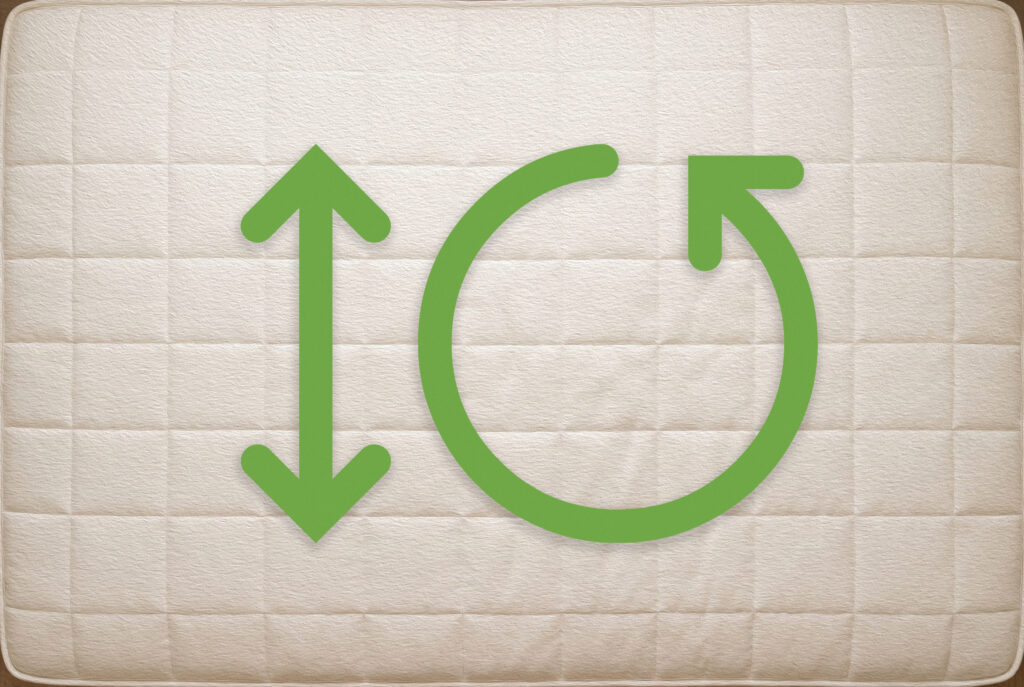
Flipping means turning the mattress completely over so the bottom becomes the top.
Rotating means spinning it 180 degrees so the head end is now at the foot of the bed, with the same side still facing up.
That distinction is the whole ballgame, because most mattresses made today are designed for one of these and not the other.
Why you shouldn’t flip most modern mattresses
The majority of mattresses sold now are one-sided, or “no-flip,” by design. They’re built in layers: a soft comfort layer on top for cushioning and pressure relief, sitting on a firmer, denser support core underneath.
That construction is the reason flipping is a bad idea. If you flip a one-sided mattress, you end up sleeping directly on the hard support base. You lose the cushioning you paid for, and you lose the proper support your spine needs. It’s uncomfortable and it can actually work against a good night’s sleep. So for most people with a modern mattress, the answer to “should I flip it?” is simply no.
When flipping is the right call
There’s an exception. Some mattresses are genuinely built to be flipped. These are double-sided, reversible, or “flippable” models, often older-style innersprings or specialty mattresses made with comfort layers on both faces. For those, flipping is exactly what keeps both sides wearing evenly.
The rule of thumb is easy: only flip your mattress if the manufacturer specifically says it’s double-sided or flippable. If you’re not sure, check the tag or the company’s website. When in doubt, don’t flip.
The whole reason people flip a mattress is to spread out the wear so one side doesn’t break down before the other. That logic holds up for a true double-sided mattress, since both faces are built to be slept on. But a modern one-sided mattress is only ever meant to wear on its top face, so flipping it doesn’t extend its life at all. All it does is give you a worse night’s sleep on the hard side.
What to do instead: rotate
Nearly every mattress, one-sided or not, benefits from rotating. Spinning it head-to-foot spreads out the wear so you’re not always compressing the same spots night after night. That helps prevent the sagging and body impressions that show up where you sleep most.
A good schedule is to rotate it once or twice a year. Memory foam, latex, and newer innerspring mattresses all do well on that timeline. Set a reminder around the change of seasons so it’s easy to remember.
A special case: layered latex mattresses
There’s one type that plays by slightly different rules. A lot of natural latex mattresses are built as separate layers, usually two or three slabs of latex of different firmnesses, stacked inside a zippered cover. If you can unzip the cover and lift the layers out, you’ve got one of these.
These are worth a mention because the individual layers can be cared for on their own. Latex is durable, but the layer you sleep on can soften a touch over the years and start to form a faint body impression. Since each slab is its own piece, you can unzip the cover every so often, then flip and rotate the layers, and even swap their order, so the wear gets spread around instead of always landing in the same spot. Many owners do this every few months, more often than they rotate the whole mattress.
A couple of things to keep in mind. This only applies to mattresses actually built as removable layers, so don’t go unzipping a sealed, one-piece mattress. And the layers are usually firmest on the bottom and softest on top for a reason, so if you rearrange them, follow the maker’s guidance and notice how it sleeps before you settle on a new order. Done thoughtfully, it’s a genuinely nice way to stretch the life of a quality latex bed.
Other ways to make your mattress last
Flipping isn’t the secret to longevity. These habits do far more:
- Rotate regularly, as above.
- Use a mattress protector. It guards against sweat, spills, dust, and the general wear that breaks a mattress down over time, and it keeps things fresher.
- Give it proper support. A sagging box spring or a bed frame without enough slat support lets the mattress dip no matter how well you care for it. Make sure the foundation is solid.
- Keep it clean. Vacuum the surface now and then, and let it air out when you strip the bed. A clean, dry mattress simply lasts longer and feels nicer to sleep on.
A fresh, well-kept bedroom makes a real difference in how rested you feel. If you’d like the rest of the room kept just as fresh while you handle the mattress, our regular house cleaning is here whenever you want a hand.