
There’s something lovely about walking into a home that smells fresh and inviting. The catch is that a lot of store-bought air fresheners get there by spraying synthetic fragrances around, which isn’t ideal if you’re trying to keep things low-tox. The good news is that the natural options often smell better anyway, and most of them you can pull together from what’s already in your kitchen. Here’s how we like to do it.
Start with the source, not the scent
Here’s the most important tip, and it’s the one people skip. A lot of “air freshening” is really just covering up a smell that has a cause. Before you reach for anything fragrant, deal with the source first.
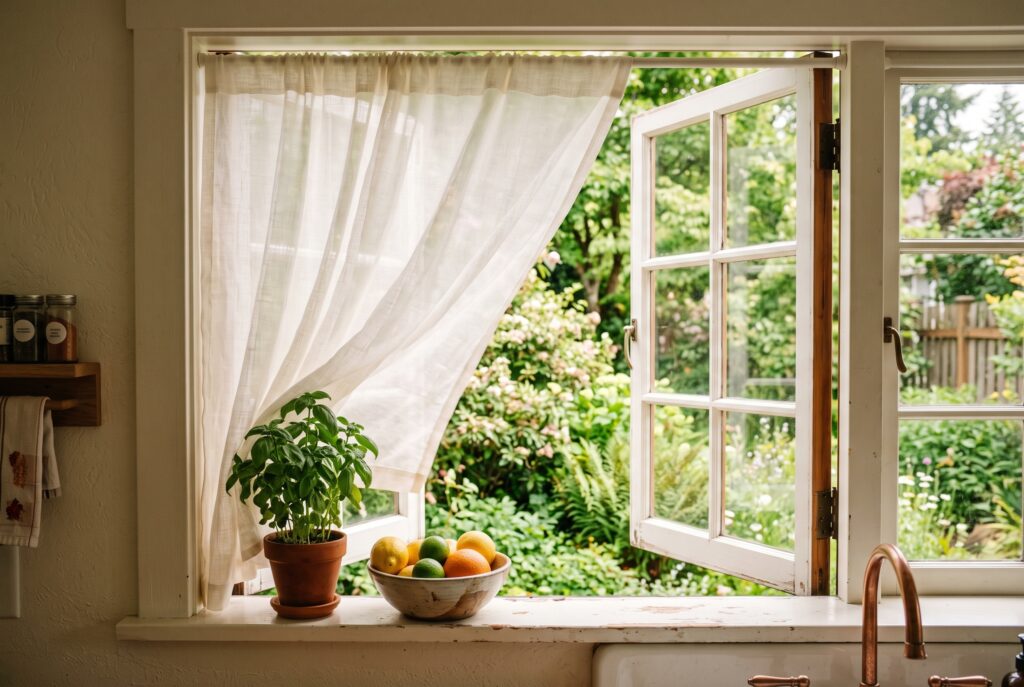
Take out the trash, run the disposal, check the fridge for anything past its prime, and empty the litter box. Then open some windows. Even ten or fifteen minutes of fresh air moving through the house does more to freshen it than any spray, by actually swapping out the stale air instead of masking it. Once the air is genuinely clean, then it’s a perfect time to add a scent you love.
Homemade ways to add a lovely scent
This is the fun part, and it’s where a little kitchen magic goes a long way.
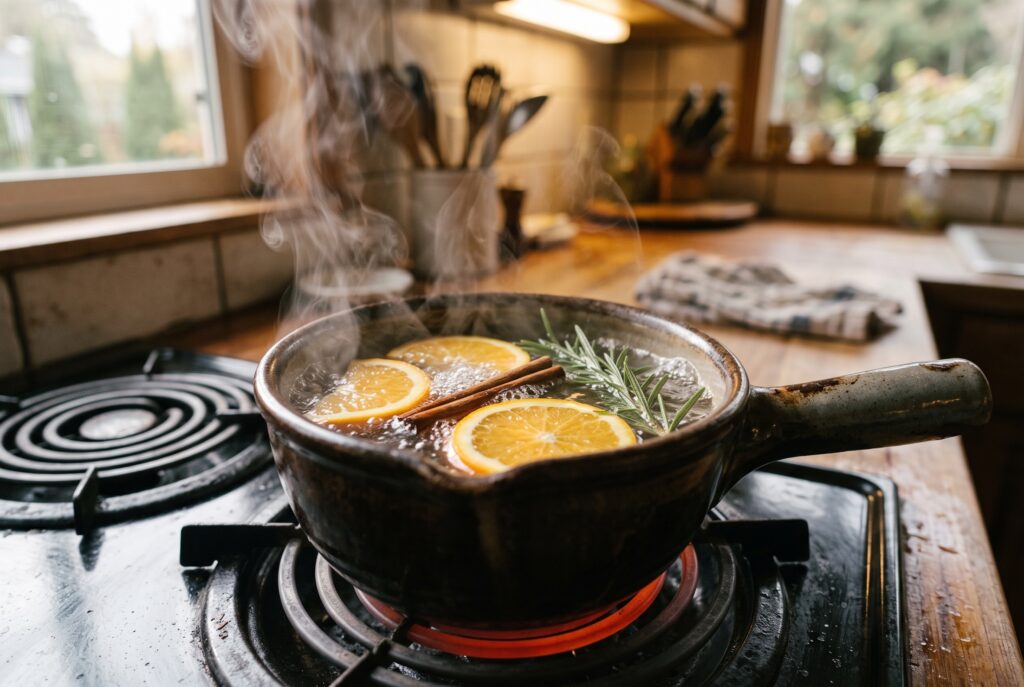
- The simmer pot. This is the classic for a reason. Fill a small pot with water, add things like citrus peels, a cinnamon stick, a few cloves, some fresh herbs like rosemary, or a splash of vanilla, and let it gently simmer on the stove. Your whole house fills with a warm, natural scent, and you control exactly what goes in it.
- Baking soda. It’s an odor absorber, not a perfume, and it’s brilliant at it. An open box in the fridge, a sprinkle in the bottom of the trash can, or a little shaken onto carpet before vacuuming quietly soaks up smells instead of covering them.
- Houseplants. A bit of greenery makes a room feel fresher and more alive. Just keep your expectations realistic. Plants make lovely decor and add a nice touch, but their actual air-cleaning effect in a normal room is modest, so enjoy them for the ambiance more than as an air purifier.
- Beeswax or soy candles. If you love a candle, these natural-wax options are a nicer choice than synthetic paraffin ones, especially scented gently with essential oils.
- Essential oil diffusing. A few drops in a diffuser is a clean, simple way to scent a room without any spray residue. A little goes a long way here.
A few honest safety notes
Natural doesn’t automatically mean risk-free, so a few sensible cautions are worth keeping in mind.
With a simmer pot, never leave it unattended and don’t let it boil dry. The water cooks off faster than you’d expect, and a dry pot on a hot burner is a real hazard. Set a timer and keep an eye on it, and top up the water as it goes.
With essential oils, easy does it. In high concentrations they can irritate, and some are genuinely harmful to pets. Cats in particular can be very sensitive to certain oils, both diffused in the air and on their skin. If you have animals at home, read up on which oils are safe around them and keep the diffusing light and well-ventilated. When in doubt, less is more.
A fresh-smelling home starts with a clean one
At the end of the day, the freshest-smelling homes are simply the cleanest ones, where odors never get a foothold to begin with. Natural scents are the finishing touch on top of that foundation.
If you’d love that consistently fresh, just-cleaned feeling without the work, that’s our whole thing. We use natural, eco-friendly products in our regular house cleaning, so your home smells clean because it genuinely is.