
Mopping sits in a strange spot on the chore list. Everyone does it, almost nobody was ever actually taught how, and a surprising amount of floor damage comes from doing it wrong: too much water, the wrong cleaner, or a mop pushing dirty water around. So let’s cover the whole subject properly, starting with the best part, which is how to need the mop less in the first place.
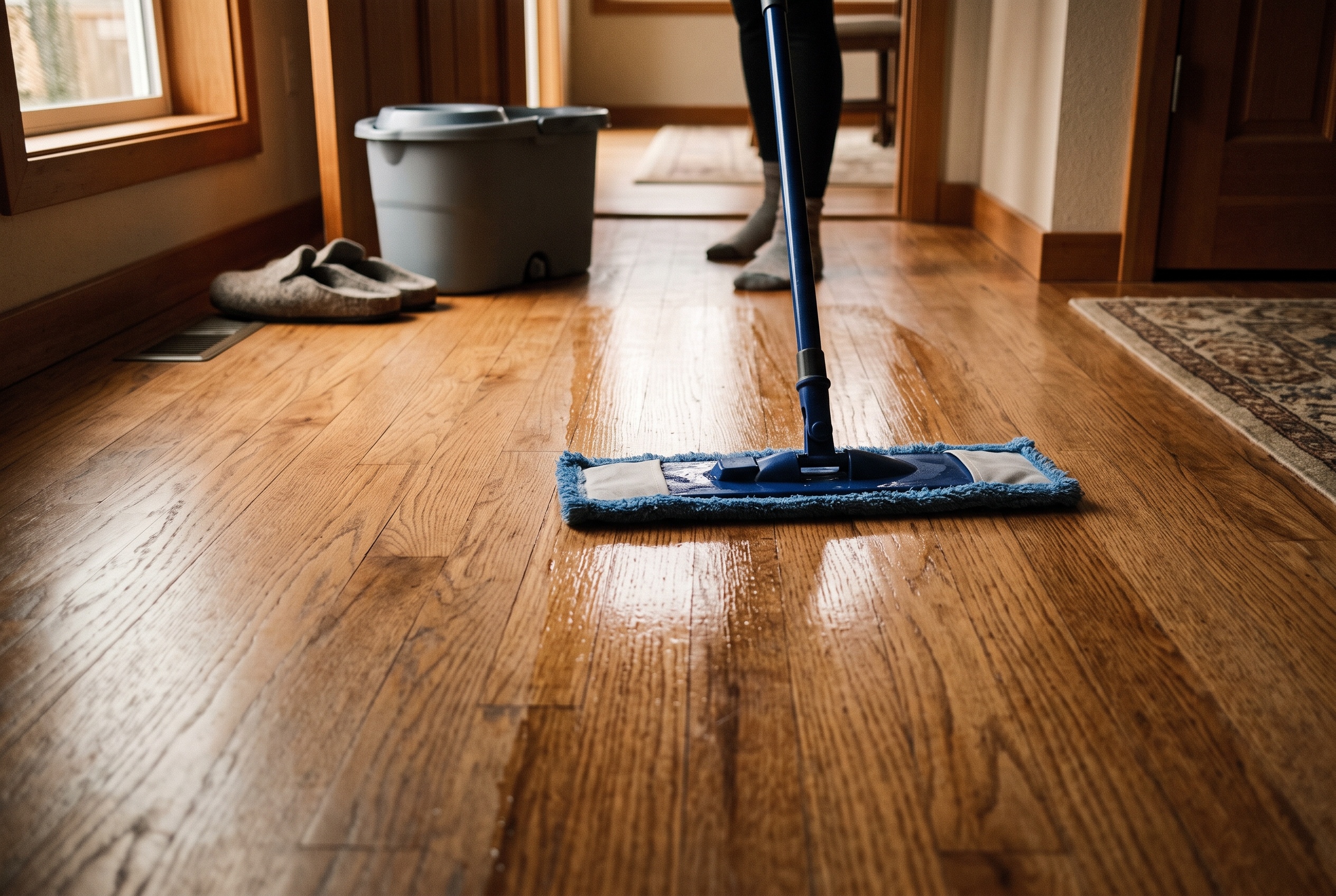
Step one: keep the floor from getting dirty
Most of what ends up on your floors walks in through the door. Cut that off and mopping day gets further apart all by itself.
- Two doormats per entrance, one outside and one inside, catch a remarkable share of incoming grit. Coarse outside, softer inside.
- A shoes-off habit is the single biggest floor-saver there is. Even a bench and a basket of socks by the door tips guests toward it without a word.
- Wipe spills when they happen. A fresh spill is a paper towel. A dried one is a mopping task, and a sticky patch collects dirt around it in the meantime.
- Runners and area rugs in high-traffic lanes take the abuse so the floor doesn’t.
Step two: always start dry
Here’s the rule that separates good mopping from mud-spreading: vacuum or sweep first, every time. A mop meeting loose grit doesn’t remove it. It makes mud, drags abrasive particles across your finish, and leaves gritty streaks. Two minutes with a vacuum or dust mop first means the wet pass only has to handle the stuck-on film, which is the part it’s actually good at.
Step three: match the cleaner to the floor
This is where floors get ruined, so it’s worth knowing your surface:
| Floor | Cleaner | Water | Steer clear of |
|---|---|---|---|
| Hardwood | pH-neutral wood floor cleaner | Damp, never wet | Vinegar (dulls the finish), shine products (build up as film), standing water in seams |
| Laminate | Laminate-specific or pH-neutral | Barely damp | Any excess moisture, which swells the fiber core |
| Tile | Neutral cleaner in warm water | Forgiving | Very sudsy mixes that leave residue; remember grout is porous |
| Natural stone (granite, marble, travertine, slate) | pH-neutral only | Fine, but wipe up | Vinegar and acids (etch permanently), harsh alkaline cleaners (degrade the sealer) |
| Vinyl and luxury vinyl plank | Neutral cleaner | Easygoing | Abrasive pads and powders |
If you take one thing from this table: a pH-neutral floor cleaner is safe on essentially everything, which is why it’s what the pros default to.
Step four: the tools and the technique
| Mop | Best for | Good to know |
|---|---|---|
| Flat microfiber | Most homes, especially wood and laminate | Wrings out to just-damp, and the pads go straight into the laundry, so you never mop with yesterday’s dirt |
| String and spin | Big tile areas and messier jobs | Real scrubbing texture and water capacity |
| Spray | Quick, small jobs | Frictionless, so they actually happen; refillable ones let you choose your cleaner |
| Steam | Sealed tile only | Sanitizes with just water, but keep it off hardwood, laminate, and most vinyl, since heat plus moisture voids most flooring warranties |
Technique is simple: work backward from the far corner so you’re not walking your own wet floor, change dirty water rather than spreading it, and let floors dry before traffic.
Or skip all four steps and let someone else love your floors for you. Regular floor care is part of every visit from our house cleaning services, grit swept, cleaners matched to the surface, no mud made.