
Cobwebs have a way of appearing overnight. You wipe down a corner, feel good about it, and a week later there’s a fresh little canopy stretched across the same spot. If you’ve ever wondered why they keep coming back and what actually keeps them away, here are the tricks we’ve picked up over the years.
First, clear them the right way
The most common mistake is swatting at a cobweb with a dry rag or a broom. All that does is smear it around and break it into little sticky pieces that cling to the wall. You want to lift the web away cleanly, not grind it in.
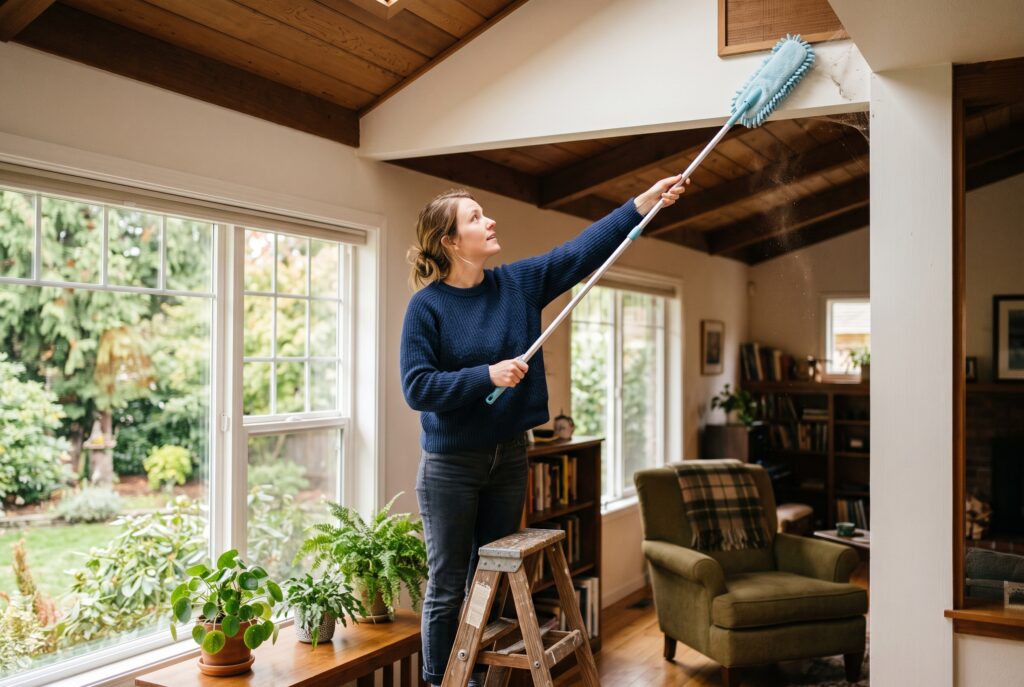
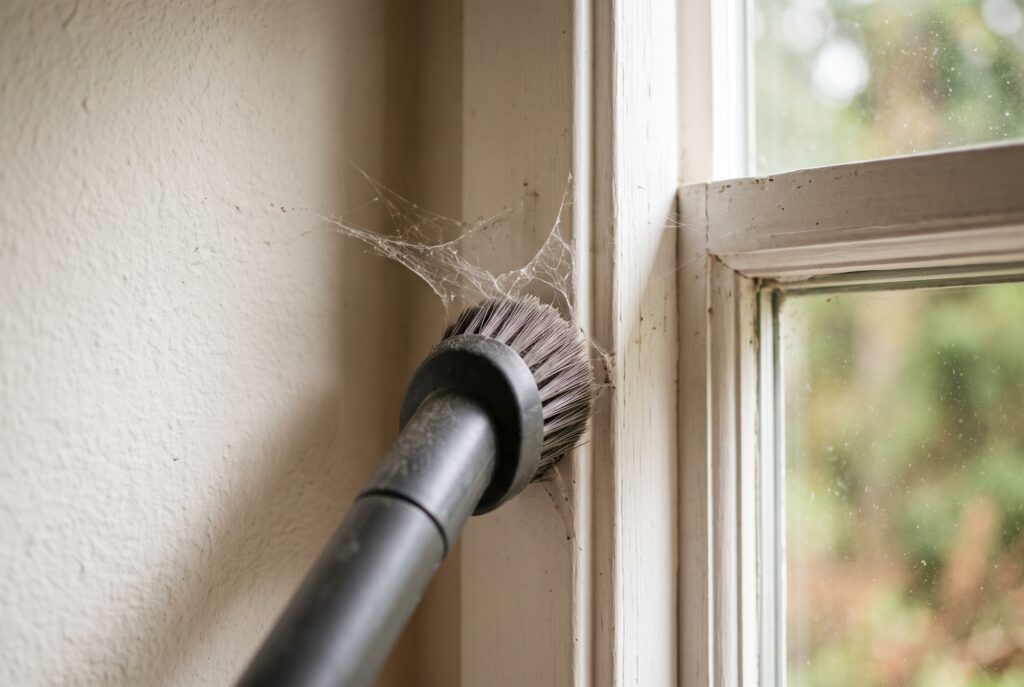
A vacuum with the brush attachment is your best friend here. The suction pulls the whole web in without spreading dust everywhere. For high corners, an extendable microfiber duster works beautifully. The fibers grab and hold the web instead of just pushing it around.
Hit the usual hideouts: ceiling corners, the tops of door frames, light fixtures, window frames, and behind furniture. Outside, check the eaves, porch lights, and the corners around entryways. Those outdoor spots matter more than you’d think, because that’s often where spiders set up before they ever wander indoors.
A quick word in defense of spiders
Before we talk about keeping them out, it’s worth saying that spiders are mostly on your side. They quietly eat the mosquitoes, flies, and other pests you actually don’t want around. The goal here isn’t to wipe them out. It’s just to keep them out of your living space and out of your eyeline. Think of it as gentle redirection, not a battle.
How to make your home less appealing
Spiders settle where they feel safe and where there’s food. Take away those two things and they tend to move along on their own.
Cut down on clutter. Piles of boxes, stacks of magazines, and crowded storage areas are spider paradise. They love undisturbed, tucked-away spots. Keeping things tidier, especially in garages, basements, and closets, removes a lot of prime real estate.
Seal the gaps. Spiders get in through small cracks around windows, doors, vents, and where pipes enter the house. Weatherstripping and a little caulk go a long way, and as a bonus they help with drafts and energy bills too.
Rethink your outdoor lighting. This one surprises people. Bright lights near doors attract bugs, and bugs attract spiders. Switching exterior bulbs to warmer, yellow-toned lighting, or simply moving the light away from the door, makes the area less of a buffet.
Keep dusting those corners. Regular dusting does double duty. It removes existing webs and signals that a spot isn’t the quiet, undisturbed corner a spider was hoping for. A space that gets touched often is a space they tend to skip.
Try peppermint, but keep expectations realistic. A lot of folks swear by a peppermint oil spray (a few drops in water) along baseboards and entry points. Spiders don’t love strong scents, so it can help as a mild deterrent. Just know it’s not a force field. It works best alongside the other steps, not instead of them, and it needs reapplying as the scent fades.
Make it a rhythm, not a chore
The real secret is consistency. A home that gets dusted and tidied on a regular rhythm simply doesn’t give spiders the still, quiet, cluttered corners they’re looking for. You don’t need to deep clean every week. You just need those high corners and tucked-away spots to get touched often enough that nobody can move in unnoticed.
If keeping up with the dusting and those easy-to-forget corners is more than you want on your plate, that’s exactly the kind of thing we handle. Our regular house cleaning keeps the whole home, cobweb-prone corners included, from getting ahead of you.