
Every bathroom fights the same battle. You take a hot shower, the room fills with steam, and all that moisture has to go somewhere. Where it goes is onto your walls, your grout, and your shower caulk, and if it lingers long enough, mildew moves in. The good news is that this battle is mostly won or lost by habits, not by scrubbing power.
Moisture is the whole game
Mold and mildew aren’t mysterious. They’re just organisms that need moisture, warmth, and something to grow on, and a bathroom offers all three. You can’t make a bathroom less warm or remove the surfaces, so every practical strategy comes down to one thing: get the moisture out faster than mold can use it.
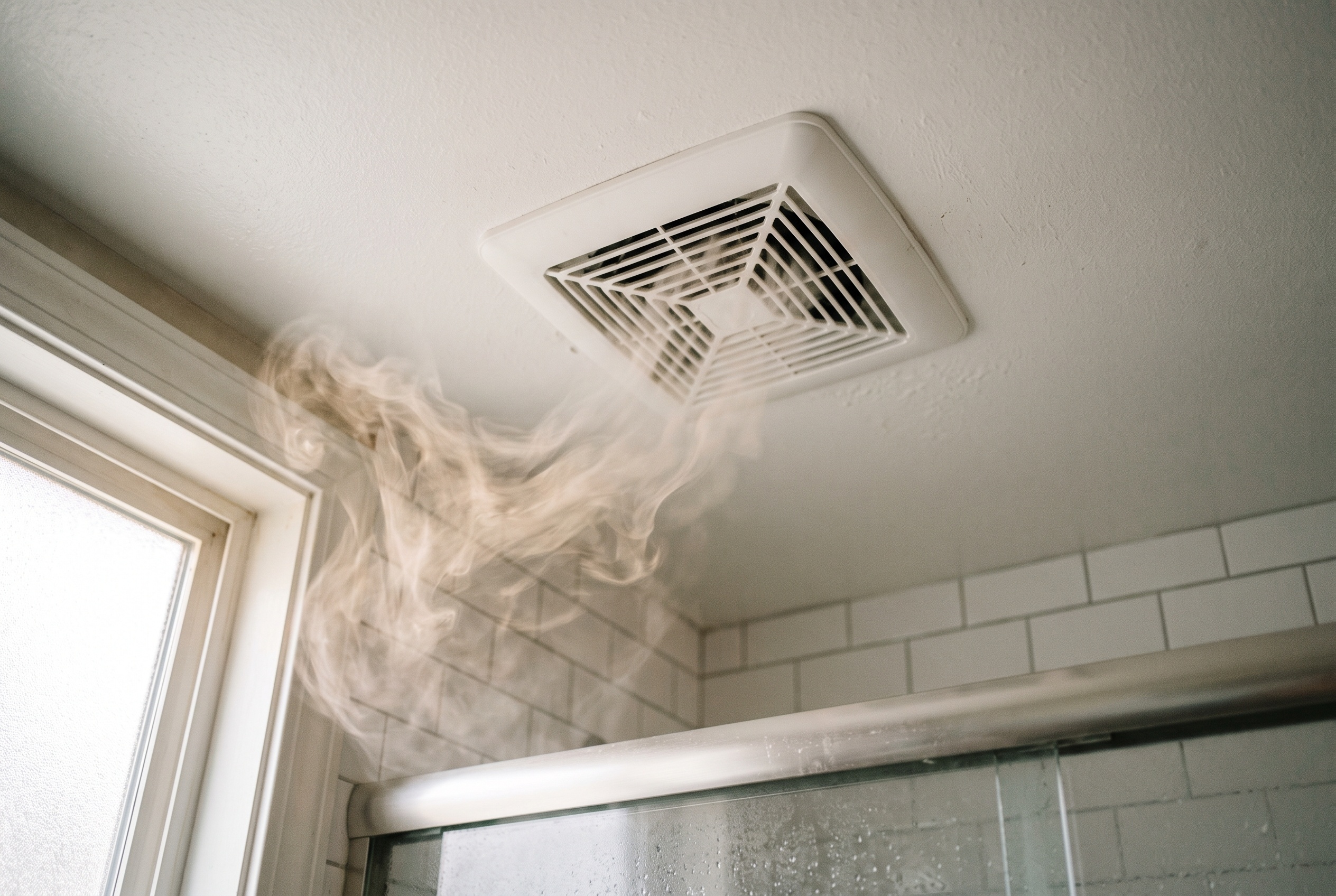
- Run the exhaust fan during every shower and for at least 20 minutes after. This is the single most effective thing you can do. The steam doesn’t disappear when you towel off, and those minutes after the shower are when most of the damage happens. If your fan is so quiet you can’t tell it’s working, hold a square of toilet paper up to it. A good fan will hold it in place.
- Crack a window or door if you don’t have a fan, or even if you do. Airflow is airflow.
- Squeegee the shower walls and glass after the last shower of the day. It takes 30 seconds and removes the standing water that feeds mildew and leaves hard water spots.
- Spread the shower curtain out so it dries flat instead of staying wet in its folds. When the liner speckles, skip the scrubbing: most liners, plastic ones included, come clean in the washing machine on gentle with a couple of towels, then go straight back on the rod to dry. Fabric polyester liners handle this best and last for years.
- Hang towels spread out, not bunched on a hook, and get bath mats up off the floor to dry.

Cleaning what’s already there
For the typical pink or gray film on tile and fixtures, regular bathroom cleaner and a brush handle it easily. That pink stuff, by the way, isn’t technically mold. It’s a bacteria that loves soap residue, and it wipes away without drama.
For dark mildew spots on grout, a paste of baking soda scrubbed in with a stiff brush does good work, and hydrogen peroxide or a mildew spray helps with staining. If you’ve read our post on hypochlorous acid, this is a place a gentle disinfectant spray earns its keep for routine maintenance. Bleach-based cleaners will whiten stained grout dramatically, but keep the room ventilated, never mix bleach with anything else, and know that on porous grout you’re sometimes bleaching the stain rather than solving the problem underneath.
Caulk is its own story. Once mold gets under silicone caulk, no amount of surface scrubbing reaches it, because the growth is behind the material. The dark line just keeps coming back. The real fix is to strip out the moldy caulk and lay a fresh bead of one rated for kitchens and baths, which is a manageable weekend job and deeply satisfying to finish.
When it’s more than a cleaning problem
A little recurring mildew in the shower is normal life. Some situations deserve more respect:
- Mold on the ceiling or walls away from the shower, which suggests the room isn’t ventilating at all.
- A musty smell that persists even when everything looks clean.
- Mold that returns fast in one specific spot, which can signal a hidden leak in the wall or floor.
- Any patch bigger than about ten square feet, which is past the size the EPA considers a routine do-it-yourself job.
Those cases are about fixing water problems, not scrubbing harder, and they’re worth addressing early.
For everything short of that, consistency wins. A bathroom that gets ventilated daily and cleaned regularly simply never gives mildew a chance to settle in. That regular upkeep is exactly the kind of thing our house cleaning services handle every week, so if you’d rather your only bathroom ritual be a hot shower, we’ve got the rest.