
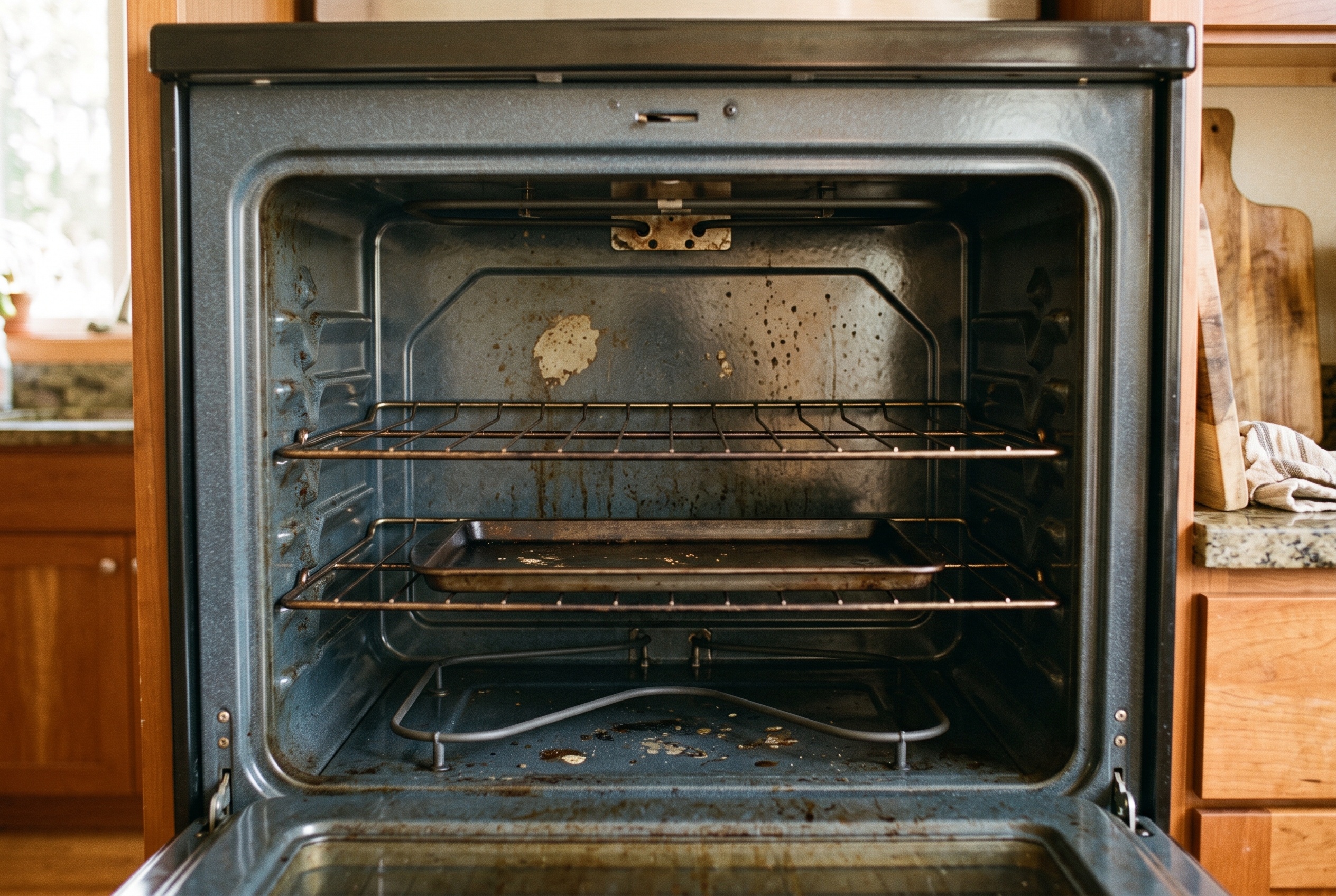
Oven cleaning has a bad reputation, and the old-school reason is those aerosol oven cleaners that could double as chemical warfare. The fumes, the gloves, the warnings on the can. Here’s the good news: for most ovens, you don’t need any of that. The gentle method works, it just asks for a little patience instead of a hazmat suit.
The overnight baking soda method
This is our favorite approach because it does the work while you sleep.
- Empty the oven and pull out the racks. We’ll deal with those separately.
- Mix a paste of about a half cup of baking soda with a few tablespoons of water, adjusting until it’s spreadable, roughly the texture of pancake batter.
- Coat the interior, focusing on the greasy, carbonized spots. Avoid the heating elements themselves and the door gasket. Don’t be shy on the floor of the oven, where the worst buildup lives. The paste will turn brown as it starts grabbing grime. That’s it working.
- Leave it overnight, or at least several hours. This step is the whole trick. Baking soda is mildly alkaline and slowly breaks down greasy, baked-on residue, but slowly is the key word.
- Wipe it out the next day with a damp cloth. A plastic scraper or an old plastic spatula helps lift the softened chunks.
- Spray a little white vinegar on any remaining baking soda haze. It foams up, loosens the residue, and wipes away clean.
For the racks, the bathtub is your friend. Lay down an old towel to protect the tub, cover the racks with hot water and a generous squirt of dish soap, and let them soak a few hours or overnight. Most of the grime wipes right off, and a scrub sponge handles the rest. One important step before you pull the plug: wipe the loosened grease off the racks and skim the floating gunk with paper towels into the trash, and set a mesh strainer over the drain for the flakes. Congealed grease clogs a tub drain just as happily as a kitchen sink.
For the glass door, the same baking soda paste works beautifully. Spread it on, wait 20 or 30 minutes, and wipe. The view into your oven is one of those things you don’t realize you’ve lost until it’s back.
The self-clean cycle: use with caution
Every modern oven has a self-clean button, and it seems like the obvious answer. Press button, walk away, done. The honest truth is that appliance technicians tend to wince at it.
Self-clean works by heating the oven to somewhere around 800 to 900 degrees and literally incinerating the residue into ash. The problem is that many ovens weren’t built to handle their own maximum setting gracefully. That extreme heat is notorious for burning out thermal fuses, door lock mechanisms, and control boards, which is why repair folks joke that the week before Thanksgiving is self-clean season in their schedule. The cycle also produces smoke and fumes that are unpleasant for people and genuinely dangerous to pet birds.
If you do use it, use it on a mild day when you can open windows, remove the racks first (the heat discolors them and can make them stick), keep birds out of the house, and don’t run it right before a big cooking holiday. Or skip it entirely and let baking soda do the job at room temperature.
Keeping it cleaner longer
- Put a rimmed baking sheet under anything that might bubble over, like pies and casseroles. Catching drips is infinitely easier than removing them.
- Skip foil on the oven floor. It can trap heat, block vents, and even fuse to the enamel. A washable oven liner rated for your oven type is the safer version of the same idea, though check your manual first, since some manufacturers advise against putting anything on the oven floor.
- Wipe spills once the oven cools, the same day. A fresh spill is a ten-second wipe. That same spill after five more uses is a carbonized fossil.
A clean oven heats more evenly, smokes less, and makes the whole kitchen smell better when you cook. And if deep-cleaning appliances is exactly the kind of task you’d love to never think about again, our house cleaning services would be glad to take the kitchen off your plate.