
Moss can have a certain charm. On a forest floor or an old stone wall, it’s downright picturesque. On the north side of your roof, it’s a slow-motion problem that most homeowners don’t notice until it’s entrenched. Here in Southern Oregon, with our wet winters and shady evergreens, moss isn’t a question of if so much as when.
Why it grows so well here
Moss needs two things: moisture and shade. Our climate delivers both for months at a stretch. From fall through spring, roofs stay damp for days at a time, and any section shaded by trees never fully dries out. Moss doesn’t have roots in the usual sense, so it doesn’t need soil. It happily anchors right onto asphalt shingles, wood shakes, concrete walkways, and brick, and the tiny bit of grit and organic debris that collects there is all the foothold it needs.
That’s why you’ll usually see it worst on north-facing slopes and under overhanging branches. Those are simply the spots that stay wet longest.
The damage is quiet but real
A little green fuzz seems harmless, and for a while it mostly is. The trouble happens as it grows over time.
- Moss holds water against your roof. Shingles are designed to shed water, and a mat of moss does the opposite, keeping them damp long after the rain stops. Over time that constant moisture degrades the shingle material.
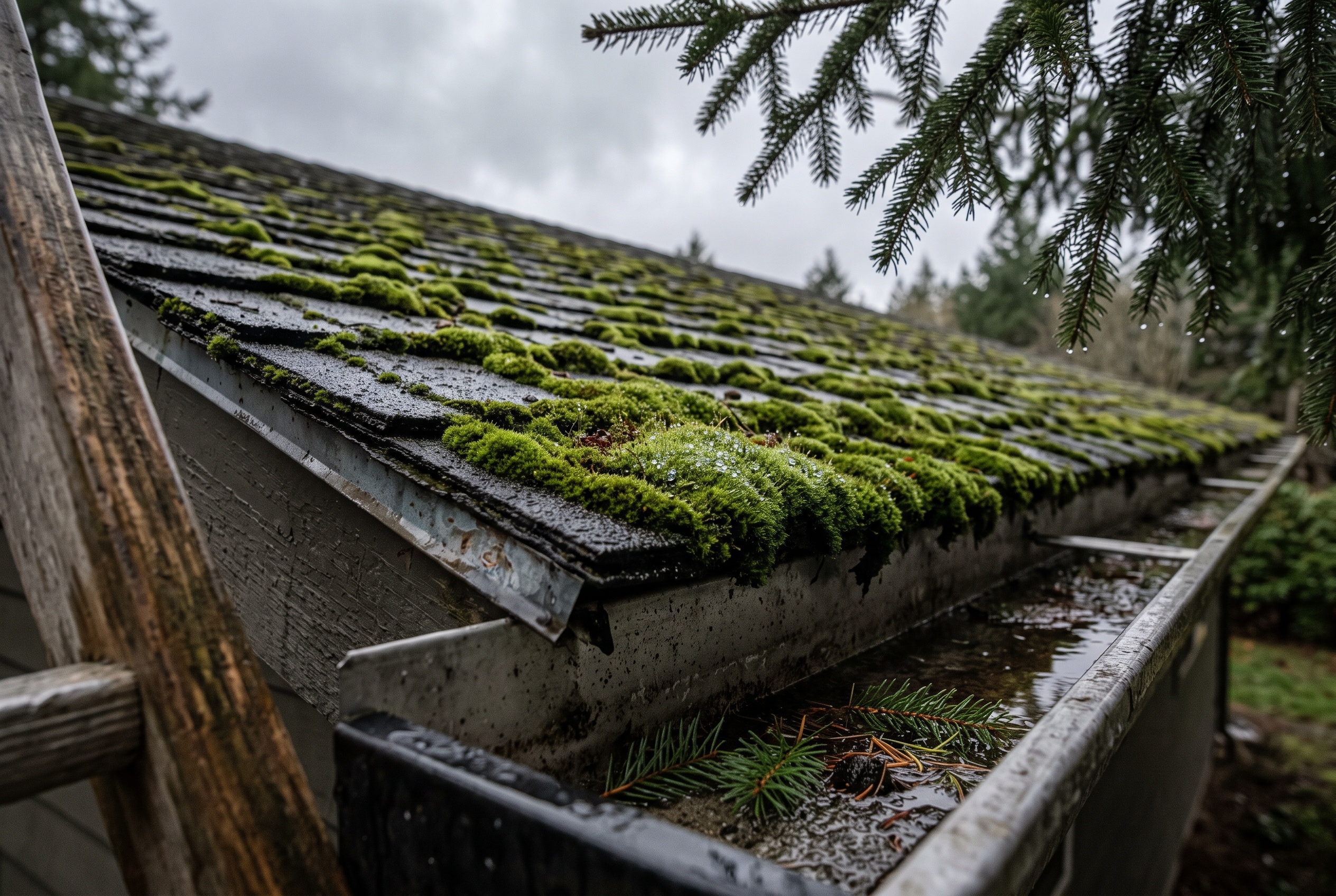
- It lifts shingle edges. As moss grows, it works its way under the edges of shingles and pries them upward, which opens paths for water to get underneath. That’s how a moss problem becomes a leak problem.
- It shortens roof life. A roof that should last 25 years can give out years early with a heavy moss population, and a roof replacement eclipses the cost of moss treatment and prevention.
- On walkways and steps, it’s a slip hazard. Wet moss on concrete is genuinely slick, and it tends to grow exactly where people walk in the rainy months.
Getting rid of it the right way
Here’s the most important thing in this whole post: never pressure wash a roof. High pressure tears off the protective granules on asphalt shingles, can rip shingles loose entirely, and can void your roofing warranty. The moss comes off, but so does a chunk of your roof’s remaining life.
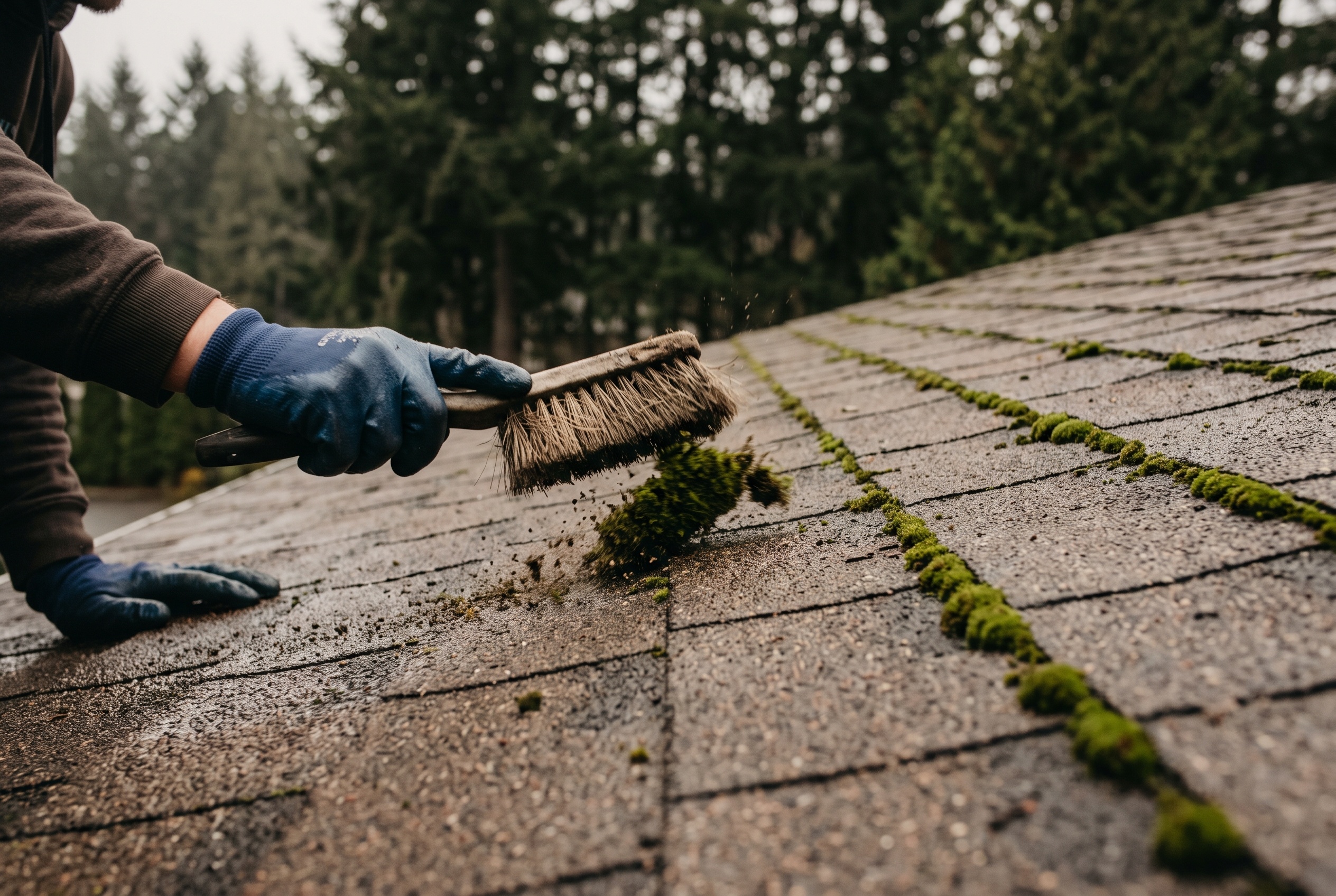
The safe approach is gentler and slower. Loose moss can be brushed off with a soft brush, always working down the slope so you’re not lifting shingle edges. Then a moss treatment product does the real work, killing what remains so it dries up and loosens over the following weeks with normal weather, though the last of the dead moss may need a final gentle sweep or rinse. Fall is a great time to treat, since the product is in place before the wet season fuels new growth. For walkways, patios, and driveways, you have more options, since concrete can handle firmer cleaning that a roof can’t.
Keeping it from coming back
Prevention comes down to taking away the shade and the moisture wherever you can:
- Trim back overhanging branches. More sunlight means a drier roof, and fewer needles and leaves means less of the debris moss loves to grab onto.
- Keep your gutters clear. Clogged gutters hold water and debris right at the roof edge, creating a perfect moss nursery.
Roof work is one of those jobs where the ladder is often the most dangerous part, so there’s no shame in handing this one off. Our moss removal and treatment service handles roofs and hardscapes safely, and pairing it with a gutter cleaning sets your roof up right for the wet months. You can get a quick gutter estimate with our gutter calculator any time.