
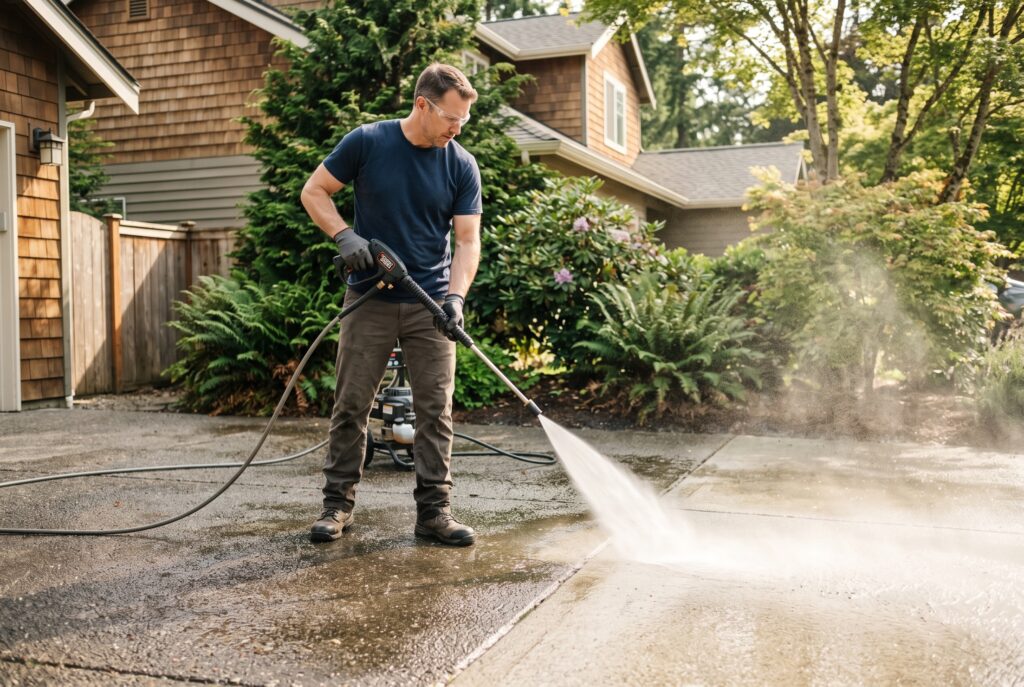
The countless views and videos on YouTube cement it: there’s something deeply satisfying about pressure washing. That instant line between grimy and clean is hard to beat. The extremely tangible cleaning results are second to none. But that same power that makes it so satisfying is exactly what can damage your home if it’s pointed at the wrong thing. A little know-how makes all the difference, so here’s a rundown of what pressure washing does well and where to be careful.
What pressure washing is great for
When it’s matched to the right surface, a pressure washer is a fantastic tool. Some of its best uses:
- Concrete driveways, walkways, and patios. These hard, durable surfaces stand up well to high pressure, and the results on years of built-up dirt and grime can be dramatic.
- Fences and decks. Great for stripping away dirt, mildew, and graying, whether you’re just freshening them up or prepping to stain or seal. Wood needs a gentler touch than concrete, though, which we’ll get to.
- Siding. Many types of siding clean up beautifully, as long as you use appropriate pressure and technique.
- Prep work. Washing a surface before you paint or seal it helps everything adhere better and last longer.
The part people skip: what it can damage
Here’s where good intentions go wrong. The wrong pressure, the wrong nozzle, or the wrong angle can do real harm, and these repairs cost far more than the cleaning ever would.
- Wood can gouge and splinter. Too much pressure on a deck or fence tears up the soft grain, leaving fuzzy, damaged wood behind.
- Paint strips right off. High pressure will peel paint, which is handy if that’s the goal and a disaster if it isn’t.
- Siding can crack or take on water. Too much force can crack siding, and aiming up underneath the boards can force water behind them, where it leads to mold and rot inside your walls. Always spray slightly downward.
- Soft stone and masonry can etch. Softer stone, old brick, and aging mortar can pit and erode under heavy pressure.
The fix for most of this is using the right nozzle and the lowest pressure that does the job, and always starting from a distance and moving closer rather than blasting up close.
When to soft wash instead
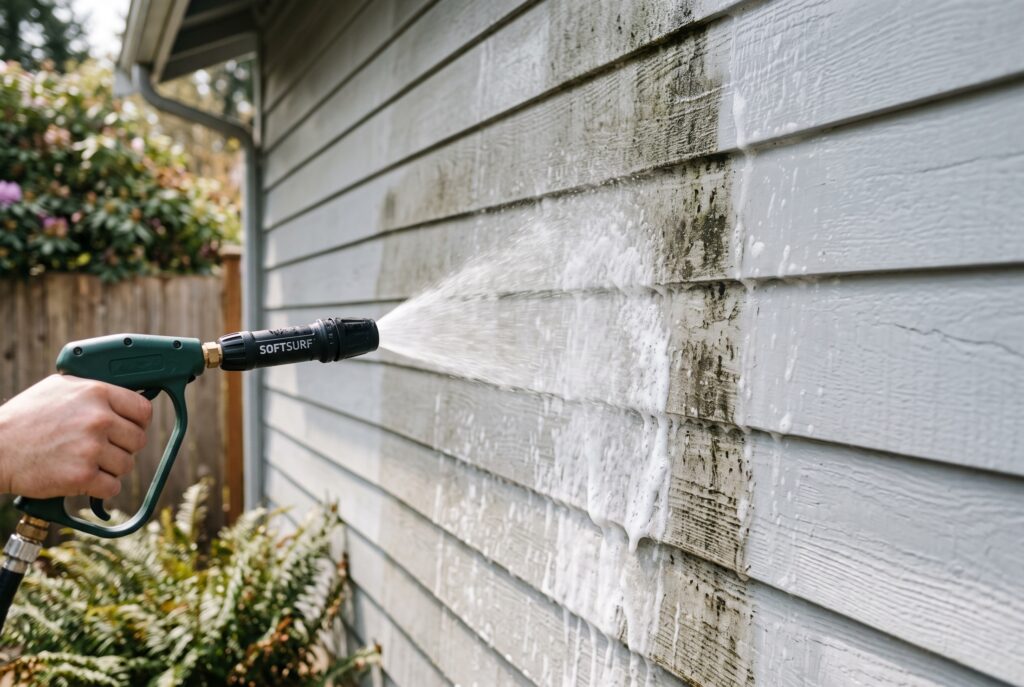
Some surfaces should never see high pressure at all. The answer for these is soft washing, which uses low pressure and specialized cleaning solutions to do the work chemically instead of by brute force.
Roofs are the big one. High pressure can rip shingles right off and void your roofing warranty, so roofs and many delicate sidings should always be soft washed. The same gentle approach is best for screens, window areas, and anything fragile.
Safety and water basics
A pressure washer is a serious tool, so a few common-sense points:
- Mind the kickback and your footing. The spray pushes back hard, and that’s especially dangerous on a ladder. For anything off the ground, reconsider whether it’s a job to do yourself.
- Keep the spray away from people, pets, electrical outlets, light fixtures, and vents. That stream can cause real injury and force water where it shouldn’t go.
- Be mindful of water use and runoff. Pressure washing uses a fair amount of water, and whatever you rinse off, including dirt, mildew, and any cleaning product, runs off into the yard and storm drains. Choose eco-friendly cleaners and avoid letting harsh chemicals wash into gardens or waterways.
DIY or call a pro?
For a small concrete patio or walkway, a rented or home pressure washer in careful hands is a reasonable weekend project. The calculus changes fast when you’re dealing with delicate surfaces that need soft washing, anything up high, or a big area where one wrong pass causes expensive damage. In those cases, the cost of a pro is usually less than the cost of a mistake.
If you’d rather have it done safely and done right, our pressure washing service handles the full range, matching the method to the surface so nothing gets damaged. You can get a quick estimate with our pressure washing calculator, and if you’ve got moss on the roof or hardscape, ask about our moss removal too.